




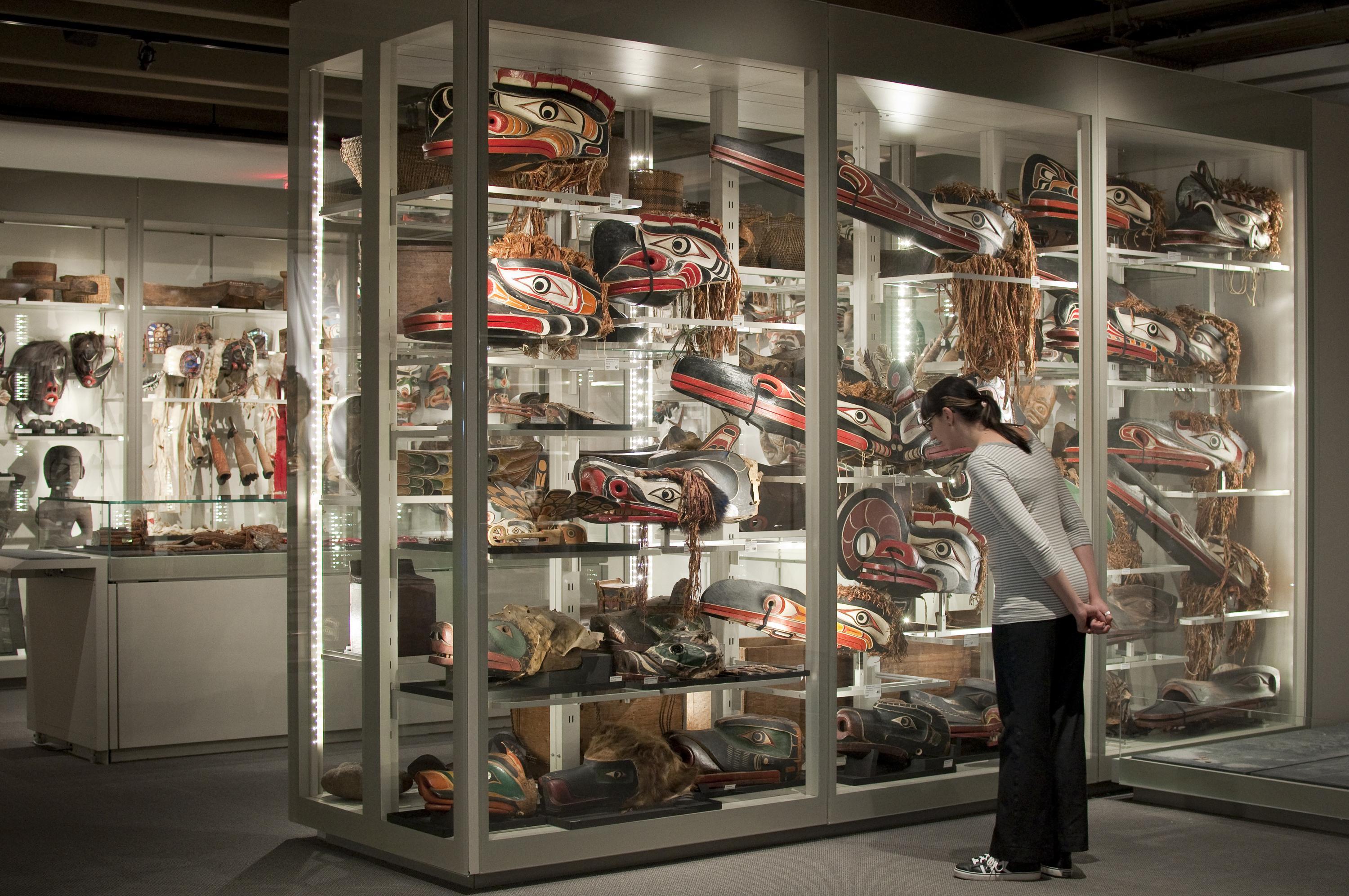

At the Museum of Anthropology, there are over 8,000 pieces of textile fibre arts in our collections, making it the largest such collection in Western Canada. The history of textiles, clothing and garments dates as far back as 100,000 years or even more, and MOA’s collection ranges from the ancient to the contemporary. Within this collection are magnificent pieces made primarily by women from around the world. As “women’s work,” textiles have often been subject to gendered criteria that define sculpture and painting as art, but not weaving. Since the first cloth was made, however, women have stitched and woven humanity’s history into memory, conveying spiritual beliefs, social and political status, and expressions of self-identity and culture.
Liphotu (Apron)
Maker unrecorded, South Africa: Ndebele

MOA collection: Ab349. Photo by Derek Tan.
Aprons such as this one are made and worn by Ndebele women as part of their ceremonial clothing to denote their stage of life. This married woman’s apron, liphotu, was traditionally made of animal skins, but nowadays is also made of canvas. Upon marriage and then on special occasions, the woman wears the jocolo, an apron with five finger-like panels symbolizing the children she will bear. Created by her mother-in-law, it was traditionally made of animal skin decorated with a background of small white beads and a coloured central, geometric design, which can also be seen in Ndebele home design.
Find me: Case 102, Drawer 4.